A leak on a cylinder comes down to one of two things. Either a part on it has failed, which is usually a repair, or the tank itself has corroded through, which means a replacement. Turn the water and the power off to it and get a plumber to have a look before you do anything else.
The part that catches people out is where the water shows up. People ring me certain a pipe has gone, because that is where they see water running from. Half the time it is the hot water cylinder.
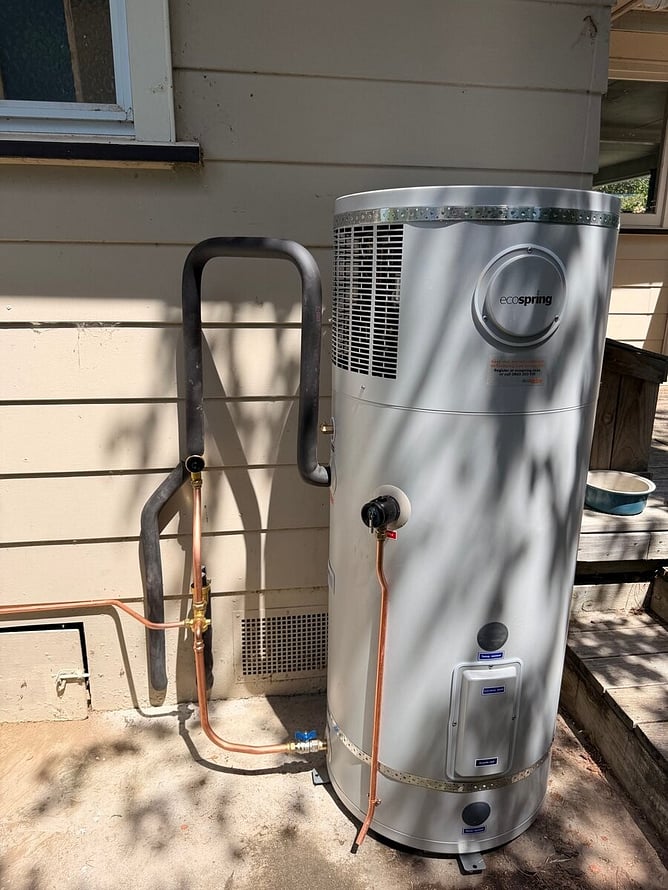
What's actually leaking: the pipe, the cylinder, or a part on it?
The tank sits inside a metal casing with insulation packed between the two. When it corrodes through, the water does not spray out sideways where you would see it. It runs down inside the casing and comes out at the base, past the pipework. You get a wet patch under a pipe, and the actual fault is a tank at the end of its life.
Most of what we get called to is one of six things.
A fitting, a valve or a connection. A nut has backed off, a valve is weeping, or a connection at one of the pipes has let go. The tank is still sound and one part is doing the leaking.
Water off the overflow or relief pipe. The relief line is designed to discharge, so a bit of water off it as the cylinder heats can be normal expansion. A steady run of it usually means the valve is on its way out, so it is worth a check either way.
The element gasket. Where the element enters the tank there is a gasket, and it can weep. That is a repairable water leak, and a separate fault from having no hot water at all, which I come back to below.
The tank corroded through. The terminal one, and the one behind the misdiagnosis above. Once the body of the tank has gone there is nothing worth patching.
External damage. Something has knocked the casing or a fitting, usually in a garage or outside where gear gets moved around.
Supply changes putting old tanks under stress. A sudden change in the mains supply can push a cylinder that was already marginal over the edge. We have noticed that when Hastings changes the treatment on the town supply, we tend to get a run of old cylinders failing the same week. That is our own observation on the tools rather than anything proven, but it comes up often enough to mention.
A few signs point at the cylinder rather than something above it:
Water pooling under the unit that comes back after you dry it up.
Rust staining low on the casing or in the tray.
A damp cupboard or wall with no pipe running to it.
Water at the top, or at a fitting, a valve or a connection, is usually repairable, because the tank is still doing its job and one component has failed. Water out of the bottom, from the body of the tank, means it has gone and needs replacing. Every decision below comes back to that.
What to do if your cylinder is leaking?
A few minutes of first aid saves a lot of mess.
Turn off the cold water to the cylinder, or the main at the toby if you cannot find that valve.
Switch it off at the circuit breaker, or turn the gas off if it is a gas unit.
Open a hot tap to drop the pressure in the system.
Contain what you can with a bucket and towels, and take a few photos for your insurance.
Ring a plumber.
If it is pouring, flooding a room, or coming through a ceiling, that is not a job for the morning. Get an emergency plumber in Hastings on the phone straight away.
Should you repair or replace a leaking hot water cylinder, and what does it cost?
Two things settle the call: how isolated the fault is, and the overall condition of the cylinder. The read above around where the water is coming from can get you most of the way there. Age comes into it as well, but we assess that off the condition of the unit in front of us rather than a number on a chart, because two cylinders the same age can be in very different shape.
I would rather change one part than sell you a whole cylinder you do not need, and I make no more money on one type over another, so I am not pushing one brand or solution either. I will also tell you plainly when a repair is throwing good money after bad, because paying for a fix on a tank that is about to go means paying twice.
On the numbers:
Repairs are charged as labour at $90 an hour plus GST, plus the part. Most part swaps, a fitting, a valve, an element gasket, come to a fraction of a new cylinder.
A standard cylinder replacement runs $3,500 to $4,000 installed (excluding the sparky's cost).
Indoor hot water cylinders cost $500 to $600 more than outdoors, because an indoor cylinder needs a drip tray and drainage run to code. An outdoor unit is the cheaper option, gives you the cupboard back, and when one does leak the water lands on the ground outside rather than through your cupboard or carpet.
If wiring or the element is involved, an electrician may bill separately for their part.
If it is a replacement, there are a few directions to go: a standard electric cylinder, continuous-flow gas, or a hot water heat pump. Which one suits depends on the space, the existing pipework, whether gas is already at the house and what the household uses, so that conversation happens on site. If you want a head start on the size, our cylinder size calculator works it out from who lives in the house and how you use hot water.
Can you replace a hot water cylinder yourself in NZ?
No, and that is not a matter of opinion. Replacing a cylinder is regulated sanitary plumbing work under the Plumbers, Gasfitters and Drainlayers Act 2006. The PGDB registers plumbers to do it, and unlicensed work carries fines of up to $10,000. On an electric cylinder the connection has to be done by a registered electrician, so one swap can need two trades.
One thing worth knowing before you ring anyone: a leak is a plumbing job, but no hot water with nothing leaking is a different fault. That is almost always the element, and the element is an electrician's fix, 99 percent of the time.
When someone rings with no hot water, I usually talk them through it on the phone first, starting with the reset switch on the cylinder. I do not have the heart to charge people to drive out when I already know what the problem is going to be. If the switch sorts it, that is a free phone call instead of a call-out fee.
How to stop your cylinder from leaking again
Get the temperature and pressure relief valve checked any time a plumber is already at the house for something else. It is a cheap part and a minute of work, and a valve that weeps or seizes does real damage over time.
Keep boxes and gear off the cylinder and its pipework so the base of the unit stays visible. If you can see the base, you spot a leak at the first stain instead of after the damage is done.
Leaking cylinder questions
How long should a hot water cylinder last?
As a rule of thumb, a modern cylinder is doing well at 15 years, and some of the old low-pressure units run far longer, 25 or 30 years in some cases. Treat that as a guide rather than a promise, because the water a cylinder has been fed and how it has been treated matter more than the install date. Rust low on the casing, staining in the tray, or water that keeps returning under the unit means it is near the end, whatever its age.
Is a leaking hot water cylinder an emergency?
It can be. A cylinder that is pouring, flooding a room, or coming through a ceiling is an emergency, so ring straight away. A slow drip is different: not a middle-of-the-night call, but not something to sit on either. A corroding tank only ever opens up further, water spreading under a floor or into a wall cavity keeps doing damage the whole time, and a leak in a cupboard that also houses electrical connections is not something to leave running. Get it booked in within a few days rather than leaving it for weeks.
Written by Jacob Mildon, director of APlus Plumbing & Gas, certified plumber and gas fitter, registered drainlayer