No hot water shows up in one of a few ways: nothing comes out of the hot tap, water comes out but stays cold, or it's only lukewarm and runs out fast. A leak, a tripped switch, a fault on the power network, a failed part inside the cylinder or a build-up of scale can each cause it. Below are the checks in the order a plumber runs them, what each result points to, and where the job needs someone licensed.
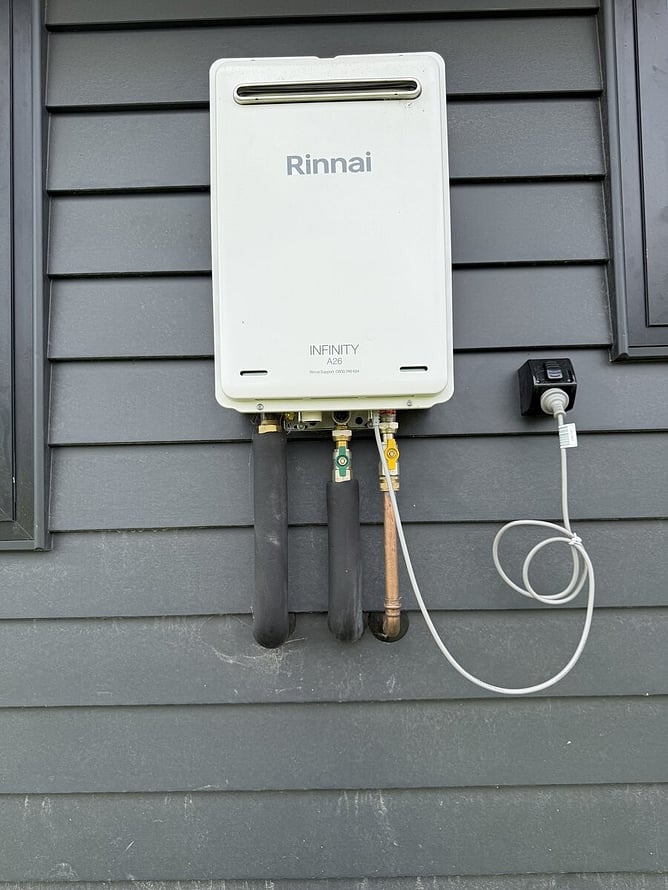
This guide is for electric hot water cylinders. If you're not sure what you've got, look at the unit. A big insulated tank with no pilot light and no gas line is electric, a tank with a pilot light runs on gas, and a small box on an outside wall with no tank is an infinity unit. Gas and infinity systems have their own checks further down.
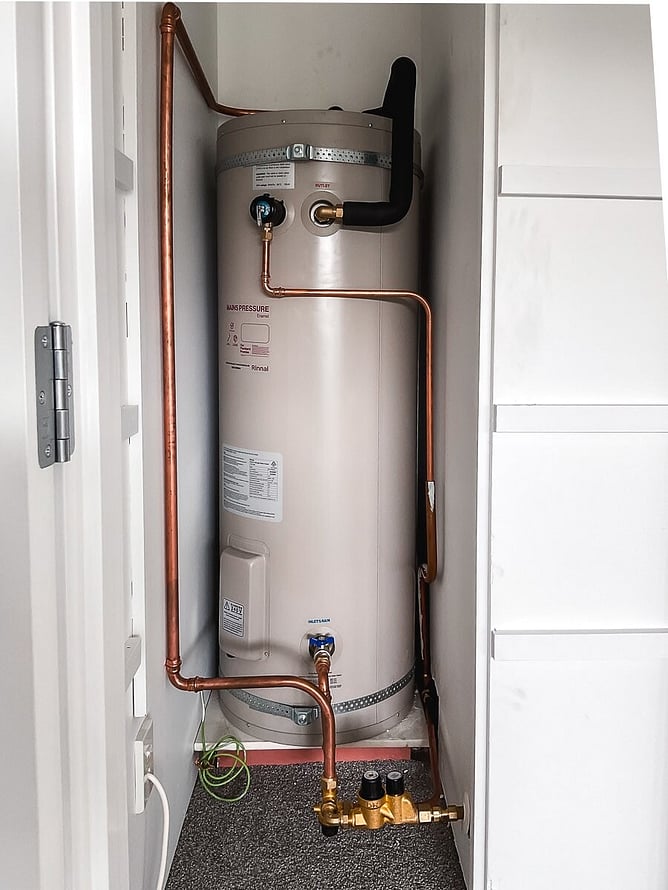
Step 1: Check the hot water cylinder for a leak
Do this first.
Go and have a look at the cylinder. Water pooling at the base, or damp carpet and staining underneath, means you've got a leaking hot water cylinder and it needs a plumber. The tank is fed under pressure, so it keeps refilling and keeps leaking, and the water ends up in your floor and framing. Rust or mineral streaks down the casing point the same way, just more slowly.
On a mains pressure cylinder, also look at the pipes outside. The odd drip from the expansion valve while the cylinder heats is normal. A steady run of cold water usually means the valve or the water pressure needs looking at. If it's hot or steaming, switch the cylinder off at the switchboard and call straight away, because it may be overheating.
Step 2: Check the hot water cylinder has power
A tripped switch is one of the most common reasons for a hot water cylinder not working, and the easiest to fix.
Find the hot water switch on your switchboard. It's usually labelled HWC, HWS or Hot Water. On plenty of houses it's out in the meter box instead of on the board inside, so look there too. Only check the switch or fuse in the meter box, and leave the sealed section and the relay alone. Some cylinders also have an isolating switch on the wall beside them, so make sure that's on.
If it has tripped, reset it once and leave it. A cylinder takes four to six hours to heat back up from cold, so the tap will run cold for a while even when the reset has worked. On an older board with fuses instead of switches, a blown fuse can't simply be reset, so call an electrician.
If the switch won't stay on, or trips again later the same day, leave it off. Holding it on only removes the protection. The usual cause is a failed element leaking current to earth, and that needs a professional to have a look at it.
A call to your power retailer is worth making too. Many New Zealand homes have their hot water on ripple control, where the network switches cylinders off at busy times and back on later. If the relay that receives that signal fails, the cylinder never switches back on while everything else in the house works normally. A street outage is easier to spot, because it takes out all your power, and once it's back the cylinder starts heating from cold.
Step 3: Run a hot tap and see what comes out
Turn on a hot tap and watch the flow, not the temperature. Try a second tap as well, because one faulty tap doesn't mean the cylinder is the problem.
Compare it with the cold side of the same tap. On a mains pressure system the two should run roughly the same, though the cold is sometimes a little stronger. On an older low pressure system the hot is normally gentler, so judge it against how that tap usually runs.
You'll see one of three things:
Nothing, or barely a trickle, from every hot tap.
A normal flow that stays cold.
Warm but not hot, or hot that soon runs out.
Nothing coming out of the hot tap
Check a cold tap first. If the cold has stopped too, look at your water supply and the toby at the boundary before you look at the cylinder.
If the cold runs and only the hot has stopped, the fault sits between the supply and your hot taps. On a mains pressure cylinder the usual suspects are a blocked strainer or a failed pressure-limiting valve on the cold pipe going in, or a blocked strainer in the tempering valve. Your cold taps keep running because they bypass all of that. It can also be a valve that has been shut, a burst pipe under the house or inside a wall, or, on an older gravity-fed system, an empty header tank in the roof or an airlock.
None of it can be fixed from the tap. If you suspect a burst, switch the cylinder off at the switchboard, turn the water off at the toby, then call. Water showing up where it shouldn't is an emergency plumber in Hastings call.
Water runs but stays cold: the element or the thermostat
Power on for at least six hours, water flowing normally, and still cold means nothing is heating the tank. It's usually one of three things, all behind the cylinder's sealed cover.
The hot water cylinder element is an electric rod that sits in the water and heats it. When it fails, the water stops heating and nothing else changes.
The hot water cylinder thermostat switches the element on and off to hold the water at temperature. When it fails, you get cold water, or water that never gets properly hot.
Most thermostats also have an over-temperature cutout, a safety switch that trips if the water overheats. Once it trips, the element stays off until someone resets it and finds out why it went.
All three sit at mains voltage and are often a job for an electrician. You can still ring us, and we'll recommend one and can arrange it for you.
Lukewarm water, or hot water that runs out quickly
Warm but not hot, or hot for a few minutes and then cold. Rule these out in order.
You've just used a lot. A few showers back to back can empty the tank, and it takes hours to recover. If that fits, give it time.
Hot and cold are crossing over. A worn mixer tap, or a failed check valve in a shower mixer or the tempering valve, can let water cross between the hot and cold lines. Sometimes the cold tap runs warm, but often you won't notice anything at the cold. On an older low pressure system, a header tank that overflows or water coming out of the vent pipe is a common sign.
Scale and sediment. Minerals in the water build up as scale on the element and as sediment in the bottom of the tank. Scale slows how quickly the water heats and shortens the element's life, and a hissing or crackling noise while the cylinder heats is a common sign.
The tempering valve. Water is stored hotter than is safe at a bathroom tap, so most cylinders have a valve on the outlet that blends cold in to bring it down. If it sticks, it blends in too much, and you get lukewarm water from a cylinder that's heating fine. Older houses don't always have one.
The thermostat is set too low. It's behind the cylinder's cover, so adjusting it is a job for a professional.
Apart from the first, these need someone to come out, and they all come under hot water cylinder repairs.
Troubleshooting a gas or an infinity hot water system
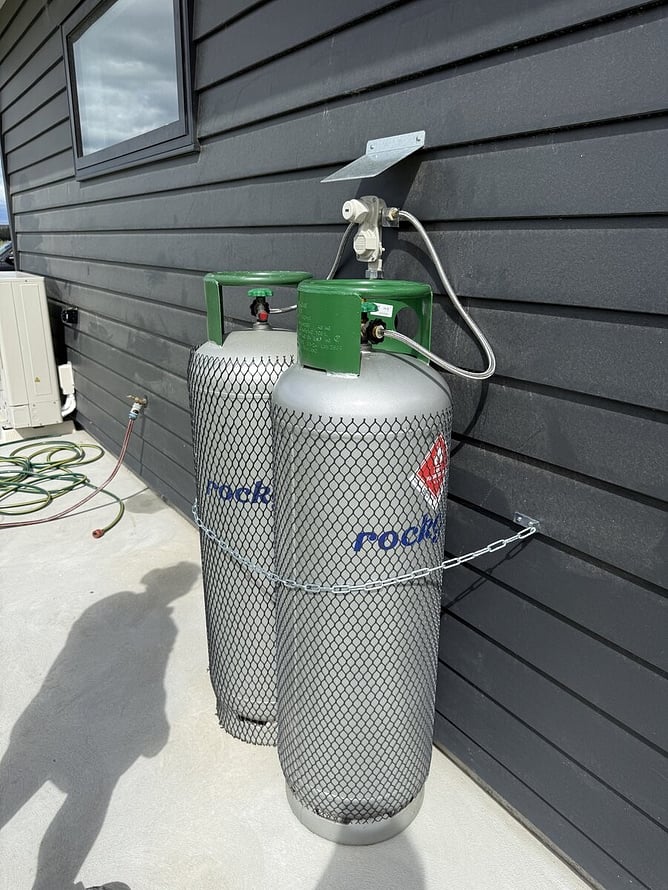
Start with the supply. On LPG, check the bottle gauge, and the changeover valve if you've got two bottles. On natural gas, see whether your other gas appliances still work, which tells you whether it's the supply or the unit.
An older unit with a pilot light stops when the pilot goes out.
An infinity unit has no pilot. It lights electronically, so it needs power as well as gas. Check its switch is on, and note any fault code on the controller before you ring.
Past those checks, it's a job for a registered gasfitter.
Common questions about no hot water
I'm renting. Who sorts out no hot water?
Tell your landlord or property manager straight away, in writing, so there's a record of when you reported it. The repair has to be authorised by the owner, so arrange the plumber through them. Checking the switchboard first is still a good idea, because a tripped switch can have the hot water back before anyone needs to visit.
Should I repair or replace my hot water cylinder?
It depends on the cylinder's age, what has failed and how often. A new element or thermostat in a cylinder that's otherwise sound is normally worth a repair. A cylinder that's leaking, or needing repairs again and again, is usually due for replacing. Our guide on a leaking hot water cylinder goes through that decision in more detail.
How do I turn off my hot water cylinder in an emergency?
Switch it off at the switchboard first, so the element isn't left heating a tank that's emptying. Then turn off the water. Mains pressure cylinders usually have an isolating valve on the cold pipe going in, and on older low pressure systems it's often on the feed from the header tank in the ceiling. The toby at the boundary shuts off the whole house. On a gas cylinder, turn the gas off too. Then call a plumber.
Can someone come out today?
Often, but nobody can promise a time before they know what's wrong. There's normally one plumber on call at a time, so it depends on what's already booked. Ring rather than email, and say what you found.
Can I fix a hot water cylinder myself?
The checks on this page are safe to do yourself: the switches at the board and in the meter box, your taps, and a gas bottle. Anything behind the cylinder's cover runs at mains voltage and needs a licensed electrician, and work on the cylinder's valves and pipework needs a plumber.
Still stuck? Call us, and what it costs
If you've been through the checks and still have no hot water, ring us and tell us what you found: whether the switch had tripped, whether it held, and what came out of the hot tap. Jacob will talk you through it over the phone and will often narrow it down before anyone gets in a van.
If someone needs to come out, our rate is $90 an hour plus GST, with no call-out fee on top in normal hours. Weekend and after-hours jobs carry a call-out fee and a minimum charge, and the current figures are on our contact page.
Ring 06 870 6000 Monday to Friday, or 027 757 3372 after hours.